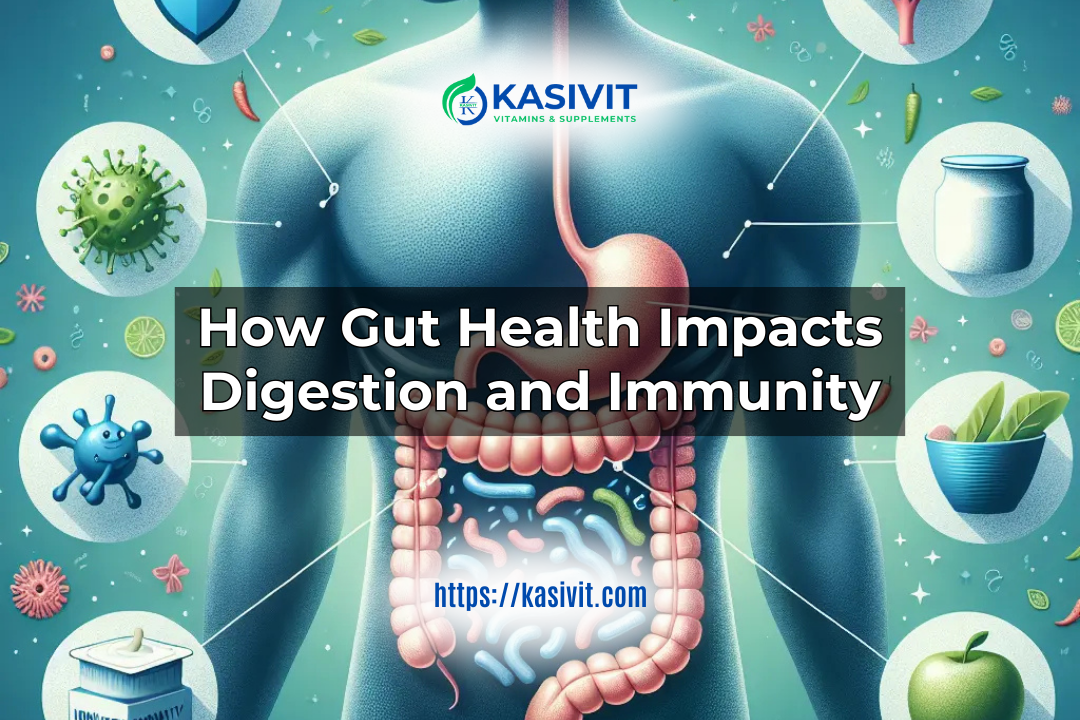
Gut health, digestion and immunity: what research shows about the gut microbiome, what is still uncertain, general diet and lifestyle tips, and when to see a doctor.
What is Gut Health?
There is no single agreed meaning of "gut health"; an expert panel proposed defining it as normal gastrointestinal (GI) function without active gut disease or gut-related symptoms that affect quality of life1. The term is also used for the community of microorganisms that live in the gut, collectively known as the gut microbiome. These microorganisms include bacteria, fungi, viruses and other microbes. One estimate puts the number of bacteria in the body at about 38 trillion, of the same order of magnitude as the number of human cells2. The gut is involved in digestion, nutrient absorption and immune function, and researchers are studying links between the gut microbiome and mental health and chronic disease, but most of these links are associations that have not been shown to be causal3.
The gut microbiome is a dynamic community of microbes that differs between people and changes over time. Dividing gut bacteria into "good" and "bad" is a simplification: findings from animal models suggest that their effects depend on context, ranging from protective to pro-inflammatory4. Differences in the gut microbiota ("dysbiosis") have been reported in many conditions, but in people it is often unclear whether they cause a condition or result from it. In inflammatory bowel disease (IBD), for example, a direct causal relationship between dysbiosis and the disease has not been definitively established in humans4. The gut communicates with the brain through the immune system, the vagus nerve, the enteric nervous system and microbial metabolites3, and it is sometimes called the "second brain". Much of this research is still developing, and the gut microbiome is only one of many factors that influence health.
The Connection Between Gut Health and Digestion
Gut microbes contribute to digestion in some ways. Gut bacteria ferment dietary fiber and other carbohydrates that the human body cannot digest on its own, producing short-chain fatty acids, which can serve as an energy source and affect various physiological processes5. Dietary fiber is a main food source for these microbes6.
A genome-based analysis predicted that many common gut bacteria can make B vitamins such as biotin and cobalamin (vitamin B12)7. That analysis did not measure how much of these vitamins the body absorbs, so a diet that supplies enough vitamins remains important.
Bloating, constipation, diarrhea and acid reflux are common digestive symptoms with many possible causes, including diet, medicines, infections and medical conditions. They should not be assumed to be caused by an imbalance of gut bacteria. For example, the American College of Gastroenterology guideline suggests testing for celiac disease and for inflammatory bowel disease in people with irritable bowel syndrome (IBS) symptoms and diarrhea8. How much the gut microbiome contributes to individual digestive symptoms is still being studied.
How Gut Health Influences the Immune System
The gut and the immune system are closely connected. One review describes gut-associated lymphoid tissue (GALT) as representing almost 70% of the immune system, with about 80% of antibody-producing plasma cells located there9. This describes where immune tissue is located; it is not a measure of how much of a person's immunity depends on gut bacteria. The gut is a main route of contact with the outside world, so its immune tissue has to respond to pathogens while tolerating food and normal gut bacteria9.
Gut bacteria interact with immune cells. In mice, certain Clostridium species promoted the build-up of regulatory T cells (cells that help keep immune responses in check) in the colon, and early-life colonization with a defined mix of Clostridium strains was followed by resistance to colitis and to allergy-type (IgE) immune responses in adult mice10. This was a mouse study, so it does not show the same effect in people.
The gut lining also serves as a barrier between the contents of the gut and the rest of the body; it includes mucus, a layer of epithelial cells and immune defenses11. Increased intestinal permeability, sometimes called "leaky gut", occurs in inflammatory or ulcerating intestinal diseases and in some "stress" states such as endurance exercise and use of non-steroidal anti-inflammatory drugs11. A review in the journal Gut notes that it is still unproven that restoring barrier function improves the clinical manifestations of gut or systemic diseases, and that information on "leaky gut" in the public domain needs confirmation before it is used to justify dietary exclusions or supplements to repair the barrier11.
Digestive Symptoms and What They Can and Cannot Tell You
Persistent bloating, gas, constipation or diarrhea are common digestive symptoms, and they should be evaluated by a doctor if they last. Other symptoms are sometimes attributed to the gut as well. Fatigue, brain fog, food intolerances and skin problems such as acne or eczema have many possible causes. We did not find a validated test or set of criteria showing that these symptoms come from an imbalanced gut microbiome, so speak to a doctor if they persist.
Persistent inflammation of the gut, as in inflammatory bowel disease (IBD), is a medical condition that needs diagnosis and treatment by a doctor. Differences in gut bacteria have been reported in people with IBD4 and with rheumatoid arthritis, where they were partly normalized after treatment12, but for IBD a direct causal relationship has not been definitively established in humans4. The gut also contains much of the body's serotonin, and in mice gut bacteria influence how it is made13. We did not find evidence that this causes anxiety or depression in people. Persistent or worsening symptoms should be assessed by a health professional rather than managed with diet changes or supplements alone.
Factors That Negatively Impact Gut Health
Several factors have been linked to changes in the gut microbiota. For many of them, the evidence comes mainly from animal or observational studies.
- Diet is one of the main factors that shape the gut microbiota6. A Western-style diet high in ultra-processed foods is strongly associated with obesity and related metabolic diseases, but the biological mechanisms, including the role of the microbiome, remain largely unknown14. Dietary fiber is a main food source for gut microbes and leads to the production of short-chain fatty acids6.
-
Antibiotics are essential for treating bacterial infections and should be taken exactly as prescribed, but they also affect gut bacteria. In a study of 12 healthy men given a 4-day course of three broad-spectrum antibiotics (meropenem, gentamicin and vancomycin), the gut microbiota returned to near its baseline composition within 1.5 months, although 9 common species remained undetectable in most of the men after 180 days15.
-
Chronic stress and poor sleep have been reported to alter the composition of the gut microbiota in preclinical (mostly animal) studies, but evidence in humans is largely lacking16.
-
Exposure to pollutants and toxicants is among the environmental factors that have been studied for effects on the gut microbiota. The evidence comes mainly from preclinical studies, and it has not been established that these exposures have a consistent, meaningful effect on the human gut microbiota16.
Diet and lifestyle choices may influence the gut microbiota, but how much any single factor matters for an individual is not well established.
Foods and Habits Often Linked to Gut Health
Diet is one of the main influences on the gut microbiota6. The points below describe common advice and what the research does and does not show.
- Fermented foods, such as yogurt, kefir, sauerkraut, and kimchi, are made through microbial growth, and an expert panel distinguishes them from probiotic supplements17. In a 17-week randomized study of healthy adults (18 per group), a diet high in fermented foods steadily increased gut microbiota diversity and decreased inflammatory markers18. This was a small study, and it does not show that fermented foods "restore balance" or prevent disease.
- Prebiotic foods, such as garlic, onions, bananas and asparagus, are often described as food for gut bacteria. A prebiotic is defined as a substrate that is selectively used by host microorganisms and confers a health benefit, and beneficial health effects must be documented for a substance to count as one19. Rapidly fermentable fibers can also cause gas, bloating and other symptoms in susceptible people, including some people with IBS20.
-
Fiber-rich foods like whole grains, legumes, fruits, and vegetables are a common recommendation for digestive health. In a meta-analysis of five randomized trials in people with constipation, dietary fiber increased stool frequency, but did not clearly improve stool consistency, treatment success, laxative use or painful defecation21. Fermentable fibers can cause gas and bloating in some people20.
- Additionally, polyphenol-rich foods like berries, green tea, and dark chocolate are being studied for their interactions with the gut microbiota, but only a few studies have examined the effect of dietary polyphenols on the human gut microbiota22.
-
Lifestyle habits are also studied. In one study, professional rugby players had more diverse gut microbiota than comparison participants, but this was also related to differences in their diet23. Stress management techniques such as meditation and yoga are widely used for general wellbeing; their effect on the gut microbiome is uncertain.
-
Drinking enough fluids is commonly advised, and it matters especially when taking fiber supplements such as psyllium: bloating and, when too little water is taken, bowel obstruction have been reported24.

The Role of Supplements in Gut Health
A varied diet is the usual foundation for digestive health, and supplements are not a treatment for irritable bowel syndrome (IBS), inflammatory bowel disease (IBD) or celiac disease. Persistent digestive symptoms need medical evaluation. Probiotic supplements contain live microorganisms, and any benefit depends on the specific strain and the condition25,26. A 2025 Cochrane review of 47 trials found that probiotics may lower the risk of C. difficile-associated diarrhea in people taking antibiotics (RR 0.50; low-certainty evidence)27. In a study in mice and human volunteers, probiotics given after antibiotics were followed by a markedly delayed and persistently incomplete recovery of the gut microbiome compared with spontaneous recovery28. Prebiotic supplements such as inulin provide fermentable fiber for gut bacteria and can cause gas and bloating in susceptible people20; in IBS trials, data for prebiotics were sparse26.
Probiotic effects are strain-specific, and the effects of one strain should not be assumed for another25. A probiotic is defined as live microorganisms that give a health benefit when given in adequate amounts29, and what counts as an adequate dose depends on the strain and the outcome studied, so a larger CFU (colony-forming unit) number is not by itself a sign of a better product. Whether multi-strain products work better than single strains is not settled: a 2011 review found only 16 studies that compared a mixture with its component strains, and the mixture was more effective in 12, but it was unclear whether this reflected interaction between strains or a higher total dose30. In IBS trials, which combinations, species or strains work remains for the most part unclear26. A CFU number on a label also does not show how many live bacteria are present when the product is used: in one laboratory study of marketed probiotic products, almost none met their label claim and 11% had no viable cells31. A label that lists the full strain names and states the count through the expiry date is more informative; see our article on CFU and survivability for more detail. Probiotics are generally considered safe for most people, but safety outcomes are inconsistently reported in trials, and systemic infections have been described in susceptible individuals32, including a reported case of sepsis in a patient with burns33. Talk to a doctor before taking a probiotic if you have a weakened immune system, a central venous catheter, a serious illness or a serious bowel condition, or if you are pregnant or breastfeeding or are choosing a product for a child. Consulting a healthcare professional can help determine whether supplements are necessary and which ones are most appropriate.

What a Healthy Gut May Mean for Long-Term Health
Researchers are studying how the gut and its microbiome relate to long-term health beyond digestion. The gut and the immune system interact, but this does not by itself show that a particular diet or supplement lowers the risk of infection or chronic disease.
Emerging research has also highlighted the gut-brain connection, which refers to communication between the gut and the brain, is an active area of research3. In mice, gut bacteria influence the production of serotonin in the gut13. In people, a 2026 meta-analysis of 12 randomized trials in 3,350 healthy working adults found a modest effect of probiotics on symptoms of depression, anxiety and stress (standardized mean difference -0.21); the authors described this as preliminary evidence and noted that results varied with strain, dose and duration34. Associations between gut microbiota and conditions such as obesity have been reported3, but they do not show that improving gut health lowers the risk of obesity, diabetes or cardiovascular disease.
When to Seek Professional Help for Gut Health Issues
Some mild, short-lived digestive symptoms settle on their own, but persistent symptoms need professional evaluation. See a healthcare professional promptly if you have blood in your stool or black stools, unintentional weight loss, severe or persistent abdominal pain, persistent vomiting, difficulty swallowing, a lump in your abdomen, fever, or a change in bowel habit that lasts more than a few weeks. Chronic digestive discomfort or severe fatigue also needs a medical evaluation. In a meta-analysis of adults with lower gastrointestinal symptoms, dark red rectal bleeding and an abdominal mass had the highest specificity (above 95%) for colorectal cancer, but the sensitivity of alarm features was poor (5% to 64%), so the absence of these symptoms does not rule out serious disease35. Supplements, including probiotics and prebiotics, do not treat IBS, IBD or celiac disease and should not replace diagnosis and treatment by a doctor.
Gastroenterologists specialize in diagnosing and treating gut-related conditions, while dietitians can provide personalized dietary recommendations to support gut health. Seeking help early lets a doctor check for treatable causes, and it is particularly important if symptoms are new, persistent or getting worse.
References: (1) Marco ML, et al. Nat Rev Gastroenterol Hepatol. 2026;23(5):432-448. PubMed · DOI (2) Sender R, et al. PLoS Biol. 2016;14(8):e1002533. PubMed · DOI (3) Cryan JF, et al. Physiol Rev. 2019;99(4):1877-2013. PubMed · DOI (4) Ni J, et al. Nat Rev Gastroenterol Hepatol. 2017;14(10):573-584. PubMed · DOI (5) Koh A, et al. Cell. 2016;165(6):1332-1345. PubMed · DOI (6) Makki K, et al. Cell Host Microbe. 2018;23(6):705-715. PubMed · DOI (7) Magnúsdóttir S, et al. Front Genet. 2015;6:148. PubMed · DOI (8) Lacy BE, et al. Am J Gastroenterol. 2021;116(1):17-44. PubMed · DOI (9) Vighi G, et al. Clin Exp Immunol. 2008;153 Suppl 1:3-6. PubMed · DOI (10) Atarashi K, et al. Science. 2011;331(6015):337-41. PubMed · DOI (11) Camilleri M. Gut. 2019;68(8):1516-1526. PubMed · DOI (12) Zhang X, et al. Nat Med. 2015;21(8):895-905. PubMed · DOI (13) Yano JM, et al. Cell. 2015;161(2):264-76. PubMed · DOI (14) Zinöcker MK, et al. Nutrients. 2018;10(3). PubMed · DOI (15) Palleja A, et al. Nat Microbiol. 2018;3(11):1255-1265. PubMed · DOI (16) Karl JP, et al. Front Microbiol. 2018;9:2013. PubMed · DOI (17) Marco ML, et al. Nat Rev Gastroenterol Hepatol. 2021;18(3):196-208. PubMed · DOI (18) Wastyk HC, et al. Cell. 2021;184(16):4137-4153.e14. PubMed · DOI (19) Gibson GR, et al. Nat Rev Gastroenterol Hepatol. 2017;14(8):491-502. PubMed · DOI (20) Ibrahim F. Clin Nutr ESPEN. 2026;76:105130. PubMed · DOI (21) Yang J, et al. World J Gastroenterol. 2012;18(48):7378-83. PubMed · DOI (22) Cardona F, et al. J Nutr Biochem. 2013;24(8):1415-22. PubMed · DOI (23) Clarke SF, et al. Gut. 2014;63(12):1913-20. PubMed · DOI (24) Kumar A, et al. Curr Nutr Rep. 2026;15(1):13. PubMed · DOI (25) Boyle RJ, et al. Am J Clin Nutr. 2006;83(6):1256-64; quiz 1446-7. PubMed · DOI (26) Ford AC, et al. Aliment Pharmacol Ther. 2018;48(10):1044-1060. PubMed · DOI (27) Esmaeilinezhad Z, et al. Cochrane Database Syst Rev. 2025;9(9):CD006095. PubMed · DOI (28) Suez J, et al. Cell. 2018;174(6):1406-1423.e16. PubMed · DOI (29) Hill C, et al. Nat Rev Gastroenterol Hepatol. 2014;11(8):506-14. PubMed · DOI (30) Chapman CM, et al. Eur J Nutr. 2011;50(1):1-17. PubMed · DOI (31) Aziz G, et al. Probiotics Antimicrob Proteins. 2022;14(2):288-312. PubMed · DOI (32) Doron S, et al. Clin Infect Dis. 2015;60 Suppl 2:S129-34. PubMed · DOI (33) Janák D, et al. Folia Microbiol (Praha). 2026. PubMed · DOI (34) Ben Fredj S, et al. BMC Psychol. 2026;14(1):175. PubMed · DOI (35) Ford AC, et al. Gut. 2008;57(11):1545-53. PubMed · DOI
This article is general information, not medical advice. Supplements are not a treatment for IBS, IBD, celiac disease or any other medical condition. Talk to a doctor or pharmacist before starting a supplement, especially if you take prescription medicines, have a medical condition, are pregnant or breastfeeding, or are choosing a product for a child.